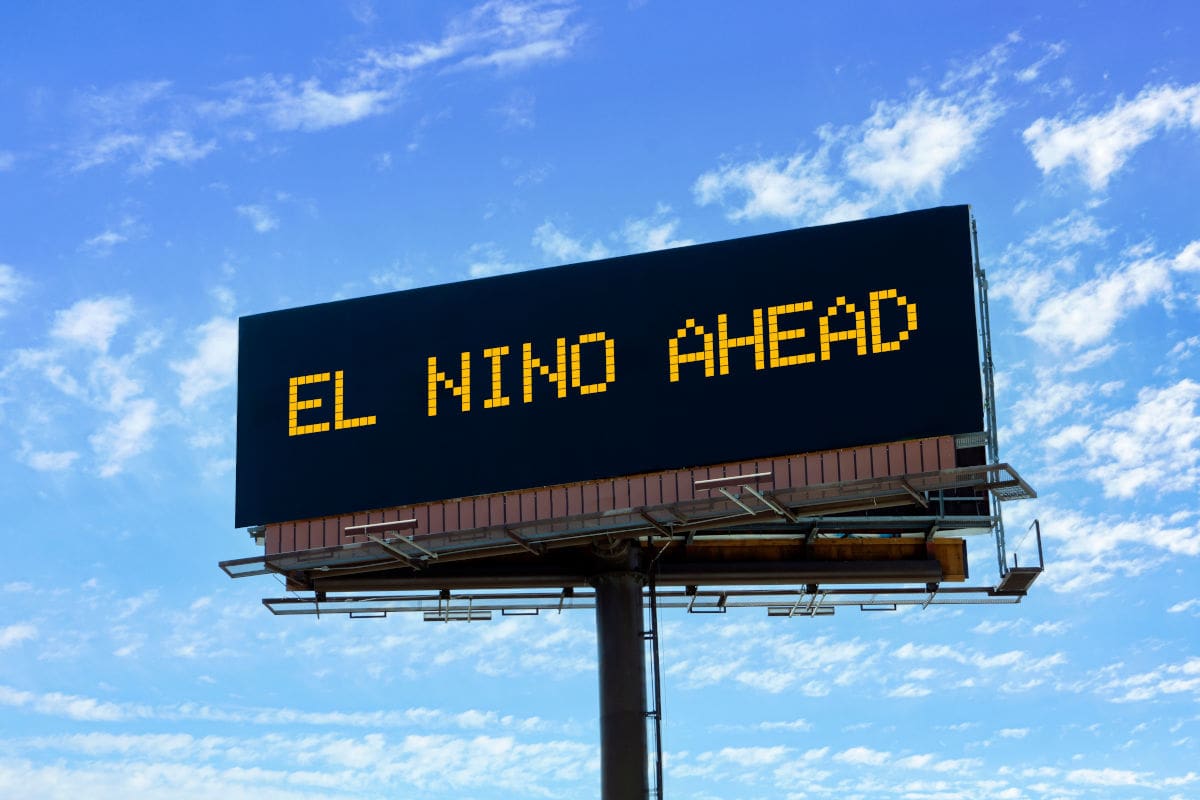
Orange County isn't built for a lot of rain, and most years we don't get much. This winter could be different. Federal forecasters expect a very strong El Niño, and the state has already declared a preparedness emergency. Here's what that means for your home, which problems usually show up when the heavy rain arrives, what you can do now, and what to do if something goes wrong.
Quick Answer: What Should Orange County Homeowners Do About El Niño?
Start before the first big storm. Clear your gutters, downspouts and yard drains and test them with a hose. Make sure water drains away from your foundation. Know where your water and gas shutoffs are. If your water heater, furnace or AC equipment sits somewhere that floods, like the garage floor or the side yard, plan for that. If you want flood insurance, buy it now: most new policies don't take effect for 30 days.
If something does flood, don't restart any gas appliance, electrical panel or HVAC system that has been underwater until a professional has checked it.
What NOAA Is Forecasting This Winter
On September 10, 2026, NOAA's Climate Prediction Center put an El Niño Advisory in effect and said there is a greater than 90% chance of a very strong event this fall and winter. It also gave a 75% chance that this El Niño will be stronger than any on record since 1950, measured by ocean temperatures in the tropical Pacific.
On September 21, 2026, the Governor proclaimed a statewide State of Emergency to get ready for it. The state expects repeated heavy rain, strong winds, flooding, landslides, debris flows and high surf.
The honest caveat: a strong El Niño raises the odds of a wet winter here, but it doesn't guarantee one. NOAA's current outlook gives coastal California about a 50-60% chance of above-normal rain from December through April. NOAA also notes that a long-term Pacific pattern that boosted the big El Niños of 1982-83, 1997-98 and 2015-16 is running the other way this year, which may soften the usual effects in some areas. And 2015-16 was a strong El Niño that left Southern California drier than normal. So the smart move is to prepare for a wet winter, not to count on one.
What Orange County Has Seen Before
Our normal year is light. John Wayne Airport averages about 11 inches of rain, and the county as a whole about 13 inches. That's why a strong El Niño winter hits so hard here: drains, roofs and slopes that sit dry most of the year get tested all at once.
- 1983: the Santa Ana River crested at the ocean and flooded low-lying Huntington Beach under three to five feet of water. Surf destroyed part of the Huntington Beach Pier.
- December 1997: the heaviest rain in 70 years fell on parts of Orange County. Newport Beach got 6 inches in a single day and Laguna Beach 5.5 inches, both all-time records.
- February 1998: flooding hit Newport Beach and Irvine, and in Laguna Beach two hillsides gave way. Two men were killed and about 300 homes were damaged.
- Winter wind: El Niño storms bring their own wind, separate from the Santa Anas. In March 1998, gusts hit 70 mph in Newport Beach, bringing down trees and knocking out power. Santa Ana winds still happen in El Niño years too.
Plumbing: What Usually Fails First
Yard drains and area drains
These cause most of the flooded-backyard calls we get.
In a dry climate, a yard drain can go years without ever handling real water. In that time dirt, leaves and roots slowly fill it in, grates break or get paved over, and nobody notices until the first big storm. Then the water has nowhere to go and heads for the lowest spot, which is often a patio, a side yard or the edge of the house.
What to do now:
- Run a hose into each yard and area drain for a few minutes. If the water backs up or drains slowly, the line is partly blocked.
- Clear the grates of leaves, mulch and dirt, and don't let landscaping cover them.
- Find where each drain lets out (the curb, a pop-up emitter or the street) and make sure the outlet isn't buried or crushed.
Yard, area and storm drains are a separate system from the drains inside your house. Clearing them is a different job from an indoor drain cleaning. Options range from snaking, hydro-jetting, camera inspection and repair.
We regularly find patio and deck drains clogged with tennis balls, leaves, mud, and accumulated debris due to a lack of routine maintenance. When heavy rain arrives, these obstructions can prevent storm drains from functioning properly, resulting in flooded yards, overflowing pools, and potentially costly water intrusion into the home. Preventative drain maintenance is essential to ensure proper drainage and protect your property before severe weather strikes.
Gutters, downspouts and grading
- Clean the gutters and check the downspouts before the rainy season. The County of Orange and Cal OES both put this at the top of their storm checklists.
- Point downspouts away from the foundation, onto ground that slopes away from the house.
- Check the grade. California's residential code calls for the ground to drop at least 6 inches within the first 10 feet away from the foundation. If water pools against your walls, that's the first thing to fix.
Sewer backups
In heavy rain, stormwater leaks into the sewer system through cracked pipes, loose joints and illegal connections, and the extra water can back up into homes. During one recent storm, Orange County's sanitation district handled 380 million gallons a day, roughly double its usual flow.
- Go easy on water during the storm. The sanitation district asks residents to hold off on laundry, dishwashers and long showers until the heavy rain passes.
- Know who owns your sewer line. In most Orange County cities, the homeowner is responsible for at least the part of the sewer line (the "lateral") on their own property, and in some areas all the way to the main under the street. Check with your city or sanitary district. A line that already has roots or cracks is more likely to back up under heavy use.
- Ask about a backwater valve if your home has had a sewer backup before. FEMA's guidance on protecting homes from flooding includes backflow valves that stop sewage from flowing backward into the house. We install backwater valves and perform camera inspections to help prevent these issues in the future.
- Never connect a downspout or pump floodwater into a sewer cleanout. It's against the sanitation district's rules and California's plumbing code, and it makes backups worse for you and your neighbors.
Water heaters in the garage
Many Orange County water heaters sit on the garage floor, which is often the first place water collects.
- Keep the area around the water heater clear so you can see it and get to it.
- Check that it's strapped. California law requires residential water heaters to be braced or strapped, and SoCalGas recommends two straps, one in the upper third and one in the lower third of the tank.
- If it was underwater, don't use it. Gas control valves that have been underwater have to be replaced, and water heater makers recommend replacing a unit that has been flooded. Call a plumber before you turn anything back on.
HVAC: Protecting Your Heating and Cooling Equipment
- Keep the outdoor unit clear. Trim plants back and pick up loose debris around it. Strong winds turn patio furniture and branches into projectiles, so secure anything loose.
- Don't wrap the AC unit. Full covers trap moisture and invite rust and pests. Never cover a heat pump, because it runs all winter.
- Think about where the equipment sits. If your outdoor unit sits in a low spot where water pools, raise it onto a pad or stand. FEMA's guidance says elevation is the most effective way to protect HVAC equipment from floodwater. We are also able to elevate equipment to protect your equipment.
- If floodwater reached your furnace, air handler or outdoor unit, turn the system off at the breaker and leave it off. Have it inspected before you run it again, and have the ducts checked too. Wet ductwork can grow mold, and running the system spreads it through the house.
- Test your carbon monoxide alarms. California law requires CO alarms in homes with a gas appliance, a fireplace or an attached garage. The CPSC recommends one on every level and outside sleeping areas, tested monthly. Storm season means more gas heating, more closed windows and more generators, which raises the CO risk.
Electrical: Outages, Downed Lines and Flooded Outlets
Moffett Plumbing & Air handles plumbing and HVAC. For electrical damage, call a licensed electrician, and for anything on the utility side, call Southern California Edison.
- Treat every downed power line as live. SCE says to stay at least 100 feet away and call 911. Storms can also electrify puddles and wet grass near a fallen line.
- Don't touch anything electrical that is wet, and don't walk into standing water to reach the breaker panel. If you can safely reach it from a dry spot, shut the power off at the main breaker. Don't turn it back on until an electrician has inspected it.
- Replace outlets, breakers and GFCIs that were underwater. Electrical industry guidance treats them as replace-only, not something to dry out and reuse.
- Test your outdoor and garage GFCI outlets now with the test and reset buttons. They're your protection when things get wet.
- Use generators outside only, at least 20 feet from the house, with the exhaust pointed away. Never run one in the garage, even with the door open. Never plug a generator into a wall outlet or wire it into your panel. That can send power back down the line and injure utility workers. The safe way is a transfer switch installed by a licensed electrician.
Your Pre-Storm Checklist
Do these before the first big storm:
- Clean gutters and check that downspouts point away from the house
- Hose-test every yard and area drain; clear the grates
- Check that the ground slopes away from your foundation
- Find your water main shutoff and tag it
- Find your gas meter shutoff. Only turn it off if you smell gas or hear a leak, and if you do, leave it off and call SoCalGas to turn it back on
- Clear the area around the water heater and check its straps
- Clear debris around the outdoor AC or heat pump; secure patio furniture
- Test smoke and CO alarms and the GFCI outlets
- Sign up for AlertOC, the county's emergency alert system
- Look into flood insurance now. Standard homeowners policies don't cover flood or mudflow, and a new flood policy usually takes 30 days to take effect
- Get sandbags if you're in a low spot. OC Public Works gives residents free empty sandbags from October 1 to April 30, and many Orange County Fire Authority stations have empty bags too. Bring your own shovel.
- Put important documents in a waterproof container and pack a basic emergency kit
Placing sandbags: fill them about half full (no need to tie them), lay them lengthwise with the flow, overlap them like bricks, and tamp each one down.
If you live near a burn scar: homes in and below the 2024 Airport Fire area, including Trabuco Creek, Bell Canyon and Hot Springs Canyon, are still covered by county debris-flow evacuation plans. Debris flows can come with very little warning. Sign up for AlertOC and follow evacuation orders right away.
What to Do If Something Goes Wrong
Water is coming into the house
- Stay safe first. If water is rising near outlets or the panel, get out of that area, and don't walk through standing water that may be energized.
- Move valuables up and away, and put down sandbags or towels where water is getting in.
- Once the water stops, start drying right away. The EPA says wet materials dried within 24 to 48 hours usually won't grow mold.
Sewage is backing up into a drain or toilet
- Stop using water in the house: no flushing, no showers, no laundry.
- Keep people and pets away from the water. Sewage carries bacteria.
- Call a plumber. If the backup came from the city's side of the line, report it to your city or sanitary district as well.
- Moffett Heating & Air’s telephones are answered 24 hours a day to help you in emergency situations.
Your water heater, furnace or AC unit got flooded
- Leave it off. Don't try to relight a pilot or restart the system.
- If the gas meter was turned off, don't turn it back on yourself. Call SoCalGas.
- Call a professional to inspect the unit before it runs again. Flooded gas controls have to be replaced, and HVAC systems should be checked and cleaned before they run.
You smell gas
- Leave the house right away, and don't flip switches or use anything that could spark.
- Call SoCalGas or 911 from outside.
The power is out
- Report it to SCE and stay away from downed lines.
- Use flashlights, not candles.
- If you run a generator, keep it outdoors and at least 20 feet from the house.
The flood is over
- Follow local guidance on whether your tap water is safe to drink.
- Clean hard surfaces with a mix of 1 cup of bleach to 5 gallons of water. Never mix bleach with ammonia or other cleaners.
- If the house was closed up wet for several days, the CDC says to assume there is mold.
Signs You Should Call a Plumber Before the Rain Starts
- A yard or area drain that backs up or drains slowly when you run a hose into it
- Water pooling against the house after watering the lawn
- Gurgling drains or a toilet that bubbles when another fixture drains (often a sewer line issue)
- A past sewer backup, or roots found in your sewer line before
- A water heater that's rusty at the base, leaking or unstrapped
Get Your Home Checked Before the Storms
Moffett Plumbing & Air has been family-owned and serving Orange County since 1969, is available 24/7 with no after-hours fees, and backs its work with a 100% satisfaction guarantee. CA License 827838. *Your Trusted Plumbing & HVAC Company in Orange County.*
Call (714) 541-6407 or schedule at moffettplumbing.com.
Frequently Asked Questions
Is this El Niño going to be a big one?
NOAA's Climate Prediction Center gives a greater than 90% chance of a very strong El Niño this winter, and a 75% chance it will be the strongest on record since 1950, measured by ocean temperatures. That raises the odds of a wet Southern California winter but doesn't guarantee one. Coastal California currently has about a 50-60% chance of above-normal rain from December through April.
When should I start preparing?
Now, before the first big storm. Flood insurance usually takes 30 days to kick in, free county sandbags are available starting October 1, and it's easier to find a clogged yard drain with a garden hose on a dry day than in the middle of a storm.
Does homeowners insurance cover flooding?
Usually not. Standard homeowners policies in California typically exclude flood, mudflow and debris flow. Flood insurance is a separate policy through the National Flood Insurance Program or a private insurer, and new NFIP policies generally take 30 days to take effect.
Can I use my water heater or furnace after it's been in floodwater?
No. Gas appliances that have been underwater need to be inspected, and flooded gas controls need to be replaced before the appliance is used again. Leave it off and call a professional.
Why did my yard flood when my drains seemed fine?
In a dry climate, yard and area drains can go years without handling real water. Dirt, leaves and roots build up slowly, so the drain looks fine until a heavy storm shows it isn't. Testing each drain with a hose before the season is the easiest way to find out.
Should I cover my outdoor AC unit for the winter?
Generally no. Full covers trap moisture and can cause rust. Never cover a heat pump, since it runs all winter. Just keep the area around the unit clear of debris.
Sources
Forecast and history
- NOAA Climate Prediction Center, ENSO Diagnostic Discussion, issued September 10, 2026
- NOAA Climate Prediction Center, 90-Day Outlook Discussion, issued September 17, 2026
- Office of the Governor of California, State of Emergency proclamation for El Niño preparedness, September 21, 2026
- NOAA Climate.gov ENSO Blog (archived), "How does El Niño influence winter precipitation over the United States?"
- National Weather Service San Diego, "A History of Significant Weather Events in Southern California" (updated March 2026) and season-to-date precipitation, John Wayne Airport
- County of Orange / Orange County Fire Authority, Local Hazard Mitigation Plan
Home preparation and safety
- S. EPA, sanitary sewer overflow fact sheet EPA-832-F-21-029F; *A Brief Guide to Mold, Moisture and Your Home*
- Orange County Sanitation District (OC San), wet-weather guidance and Ordinance OCSD-53
- California Residential Code R401.3, as applied in County of Orange grading policy; California Plumbing Code §1101.3
- FEMA P-348, *Protecting Building Utility Systems From Flood Damage*; FEMA P-2181 Fact Sheet 3.4.1 (HVAC)
- California Health & Safety Code §19211 (water heater strapping) and §17926 (CO alarms)
- S. Consumer Product Safety Commission, flood safety release (Feb 2024), generator and CO alarm guidance
- CDC, reentering a flooded home, electrical hazards and bleach cleaning guidance
- Southern California Edison, electrical safety and generator safety; SoCalGas, emergency preparedness and gas shutoff guidance
- gov (National Flood Insurance Program); California Department of Insurance, flood and mudflow coverage fact sheet
- OC Public Works Storm Center and "Be Flood Ready"; Orange County Fire Authority sandbag program; City of La Habra, "Sandbagging 101"
- Orange County Sheriff's Department Emergency Management, Airport Fire debris-flow planning; Cal OES storm season safety